EARTHQUAKES, AND FIRES AND MUDSLIDES..OH MY!

The Southeast has hurricanes and thunderstorms. California has earthquakes. You live in the area long enough and you will experience a tremor if not an outright shaker. Some folks think this is why people from LA are not “well grounded”. No need to panic. Just be prepared by doing some common sense things:
-If one occurs, get outside away from buildings and telephone poles, or at least get under a heavy piece of furniture like a desk. Get out of carports (see picture below). Getting in the doorway can be a bad idea – it can slam on your fingers. Best to get under the dining room table, or if you have an old cast iron bathtub hop in that and cover yourself with something solid.

-Do not put heavy objects on shelves or in cabinets higher than shoulder height. So if an earthquake occurs, and these things fly off the shelf, they are not falling onto your head. Place heavy objects on low shelves, lighter object on higher shelves.
-Secure shelving and other appliances like televisions and furniture to walls. There are lots of little gadgets you can buy to do this. Go to any hardware store and you’ll find lots of options.
-The most common injury during an earthquake is cut feet from broken glass. So keep a pair of shoes near your bed at night. For some reason most earthquakes occur in the early mornings- when the earth is cooling off, and we are asleep. So a pair of flip-flops by or under the bed is an easy safety tip to follow.
-Keep walking shoes in the car in case you get stranded and have to walk a long way…women (or anyone) who wear high heels, this tip is especially for you- courtesy of a female faculty member, with bad ankles ;)
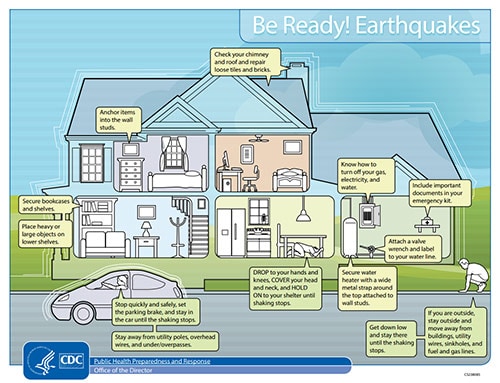
for mote details of earthquake safety, see the CDC recommendations listed below).
 Forest fires are common. Ocean areas have mudslides. Rarely do they actually endanger you, but they can be an annoying road impediment and traffic increaser.
Rain is rare. And when it does rain, people go into a manic state. They don’t know how to drive when water hits a windshield. You as south easterners are much better rain drivers than the average So-Cal driver.
You will laugh at them.
Go ahead. It’s normal.
EARTHQUAAAAAAAKE!
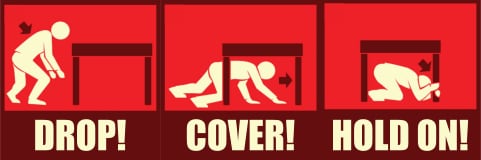
Drop. Cover. Hold on.
In most situations, you can protect yourself if you immediately:
- DROP down onto your hands and knees before the earthquake knocks you down. This position protects you from falling but allows you to still move if necessary.
- COVER your head and neck (and your entire body if possible) underneath a sturdy table or desk. If there is no shelter nearby, get down near an interior wall or next to low-lying furniture that won’t fall on you, and cover your head and neck with your arms and hands.
- HOLD ON to your shelter (or to your head and neck) until the shaking stops. Be prepared to move with your shelter if the shaking shifts it around.
If you are inside, stay inside.
DO NOT run outside or to other rooms during an earthquake. You are less likely to be injured if you stay where you are.
To reduce your chances of being hurt, take the following actions:
- If possible, within the few seconds before shaking intensifies, quickly move away from glass, hanging objects, bookcases, china cabinets, or other large furniture that could fall. Watch for falling objects, such as bricks from fireplaces and chimneys, light fixtures, wall hangings, high shelves, and cabinets with doors that could swing open.
- If available nearby, grab something to shield your head and face from falling debris and broken glass.
- If you are in the kitchen, quickly turn off the stove and take cover at the first sign of shaking.
- If you are in bed, hold on and stay there, protecting your head with a pillow. You are less likely to be injured staying where you are. Broken glass on the floor can cause injuries if you walk or roll onto the floor.
DO NOT stand in a doorway. You are safer under a table. In modern houses, doorways are no stronger than any other part of the house. Doorways do not protect you from the most likely source of injury − falling or flying objects. Most earthquake-related injuries and deaths are caused by falling or flying objects (such as TVs, lamps, glass, or bookcases), or by being knocked to the ground.
If you are in a high-rise building, drop, cover, and hold on.
- Move away from windows and outside walls.
- Stay in the building.
- DO NOT use the elevators. The electricity may go out, and the sprinkler systems may come on.
- If you are trapped, stay calm. Try to get someone’s attention by tapping on hard or metal parts of the structure. Doing so may increase your chances of being rescued.
If you are inside a crowded place, drop, cover, and hold on.
- Do not rush for the doorways. Others will have the same idea.
- Move away from display shelves containing objects that may fall.
- If you can, take cover and grab something to shield your head and face from falling debris and glass.
If you are outside, stay outside.
Stay inside if you are inside and outside if you are outside.
- Move away from buildings, utility wires, sinkholes, and fuel and gas lines. The greatest danger from falling debris is just outside doorways and close to outer walls of buildings.
- Go to an open area away from trees, telephone poles, and buildings. Once in the open, get down low and stay there until the shaking stops.
- The area near the outside walls of a building is the most dangerous place to be. Windows, facades, and architectural details are often the first parts of the building to collapse. Stay away from this danger zone.
If you are in a moving vehicle, stop as quickly and safely as possible.
- Move your car to the shoulder or curb, away from utility poles, overhead wires, and under- or overpasses.
- Stay in the car and set the parking brake. A car may jiggle violently on its springs, but it is a good place to stay until the shaking stops.
- Turn on the radio for emergency broadcast information.
- If a power line falls on the car, stay inside until a trained person removes the wire.
- When it is safe to begin driving again, watch for hazards created by the earthquake, such as breaks in the pavement, downed utility poles and wires, rising water levels, fallen overpasses, or collapsed bridges.
If you are in a stadium or theater, stay in your seat. Protect your head and neck with your arms or any way possible.
- Do not leave until the shaking is over.
- Walk out carefully watching for anything that could fall during the aftershocks.
If you are near the shore, drop, cover, and hold on until the shaking stops.
- If severe shaking lasts 20 seconds or more, immediately evacuate to high ground as a tsunami might have been generated by the earthquake.
- Move inland 2 miles (3 kilometers) or to land that is at least 100 feet (30 meters) above sea level immediately. Don’t wait for officials to issue a warning.
- Walk quickly, rather than drive, to avoid traffic, debris, and other hazards.
If you cannot drop to the ground, try to sit or remain seated so you are not knocked down.
- If you are in a wheelchair, lock your wheels. Remove any items that are not securely attached to the wheelchair.
- Protect your head and neck with a large book, a pillow, or your arms. The goal is to prevent injuries from falling down or from objects that might fall or be thrown at you.
- If you are able, seek shelter under a sturdy table or desk. Stay away from outer walls, windows, fireplaces, and hanging objects.
- If you are unable to move from a bed or chair, protect yourself from falling objects by covering up with blankets and pillows.
- If you are outside, go to an open area away from trees, telephone poles, and buildings, and stay there.
- For more resources for people with impaired mobility and other access and functional needs, visit the Earthquake Country Allianceexternal icon.
BLOG CATEGORIES:
-Home Page
-"Eat, Drink, Do And See"- Stuff to do in L.A.
-"Jobs, Jobs, Jobs"- Finding Work in L.A.
-Shooting Movies in L.A.
-...Just For The Actors
-...Just For The Writers
-"Home Sweet Home"- Where To Live and Find An Apartment
-Compass- How To Know Where You Are
-Car Society- Navigating Freeways And Roads in L.A.
-Safety Points- How To Stay Alive and Injury-free in L.A.
These categories can be found at the bottom of every page so you can navigate your way from one to another.